Existing conditions
Review roof areas, drainage, penetrations, perimeter details, previous repairs, access, and other visible factors that affect planning.

A commercial roof replacement affects more than the roof. MidPoint helps Kansas City owners and property teams organize the scope, communication, access, and next steps around the building.
Condition firstUnderstand why replacement is being considered
Property-aware planningAccess, occupants, equipment, and operations
Clear communicationScope and next steps explained plainly
The existing roof, deck, insulation, drainage, penetrations, edge conditions, access, and use of the building all shape a replacement conversation. So do budgets, tenants, equipment, and the timing of the work.
MidPoint starts by understanding the roof and the property. That creates a clearer basis for discussing the replacement scope and the coordination the building will require.
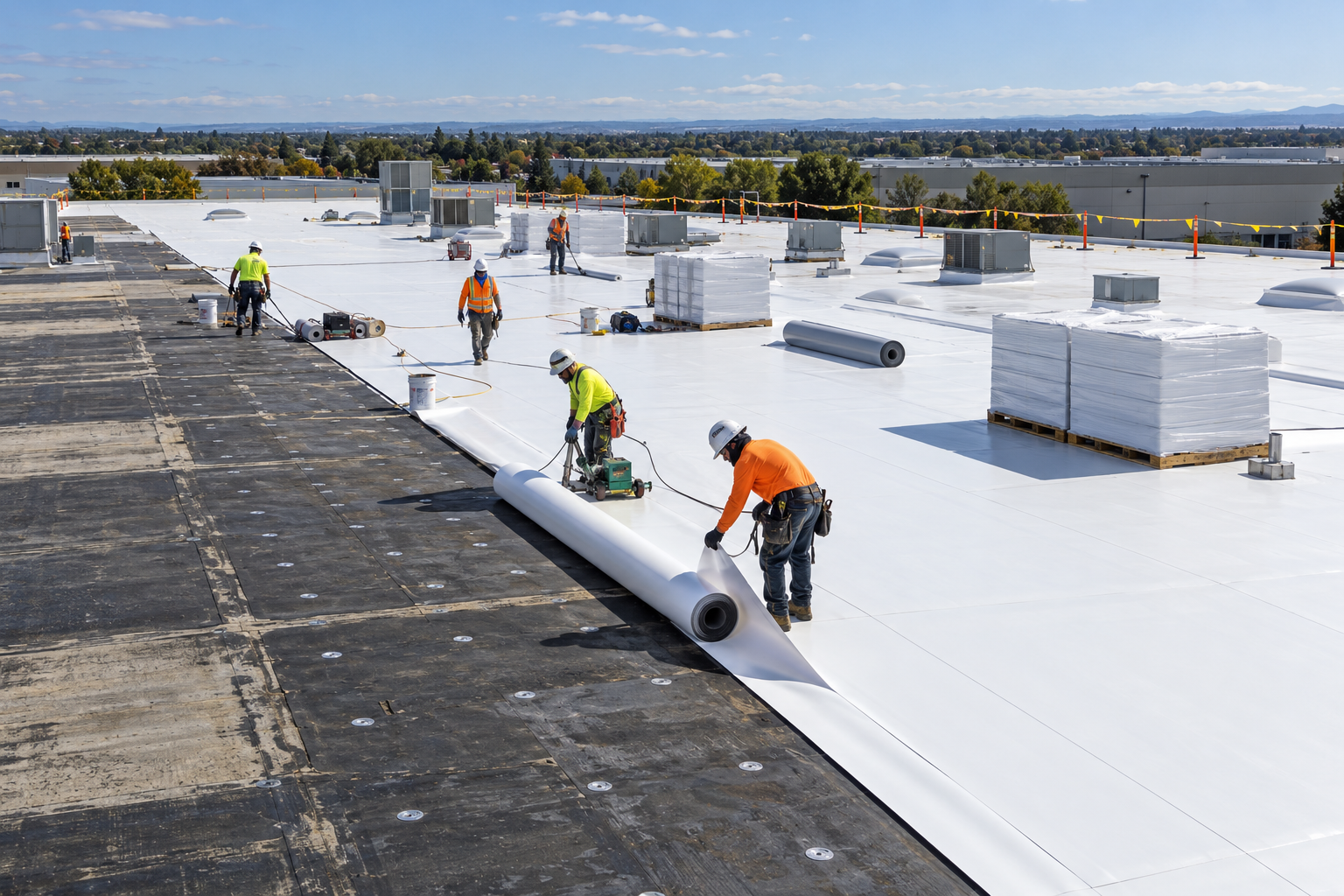
Replacement planning connects visible roof conditions with the building, the intended use of the property, and the work required to deliver a complete system.
Review roof areas, drainage, penetrations, perimeter details, previous repairs, access, and other visible factors that affect planning.
Discuss the roof assembly and critical transitions in the context of the building rather than treating the field membrane as the only decision.
Consider tenant communication, staging, access, rooftop equipment, noise, deliveries, and other property-specific constraints.
Keep the property team informed through the work and organize the information needed when the project is complete.
A clear process helps ownership, management, and the roofing team work from the same plan.
Review the roof, building context, and reasons for replacement.
Organize the roof areas, details, access, and intended scope.
Plan communication and logistics around property operations.
Complete the work with clear updates and project closeout.
The right answers depend on the roof and the way the property operates.
Repair frequency, moisture, condition across multiple roof areas, the surrounding roof system, and long-term property plans all matter. A broader assessment helps compare another repair with replacement planning.
Property access, occupied areas, equipment, deliveries, noise, and communication should be discussed before work begins. The specific plan depends on the building and project scope.
Roof dimensions, age, known system type, leak and repair history, previous reports, roof plans, and intended project timing can all help frame the conversation.
Some properties have multiple roof sections with different systems, ages, and conditions. An assessment can help define whether the project should be considered as one scope or in planned phases.
Tell us about the building, current roof concerns, and the timing your team is considering.