Drainage and debris
Review drains, scuppers, gutters, and low areas for blockages or standing water that may place added stress on the roof system.
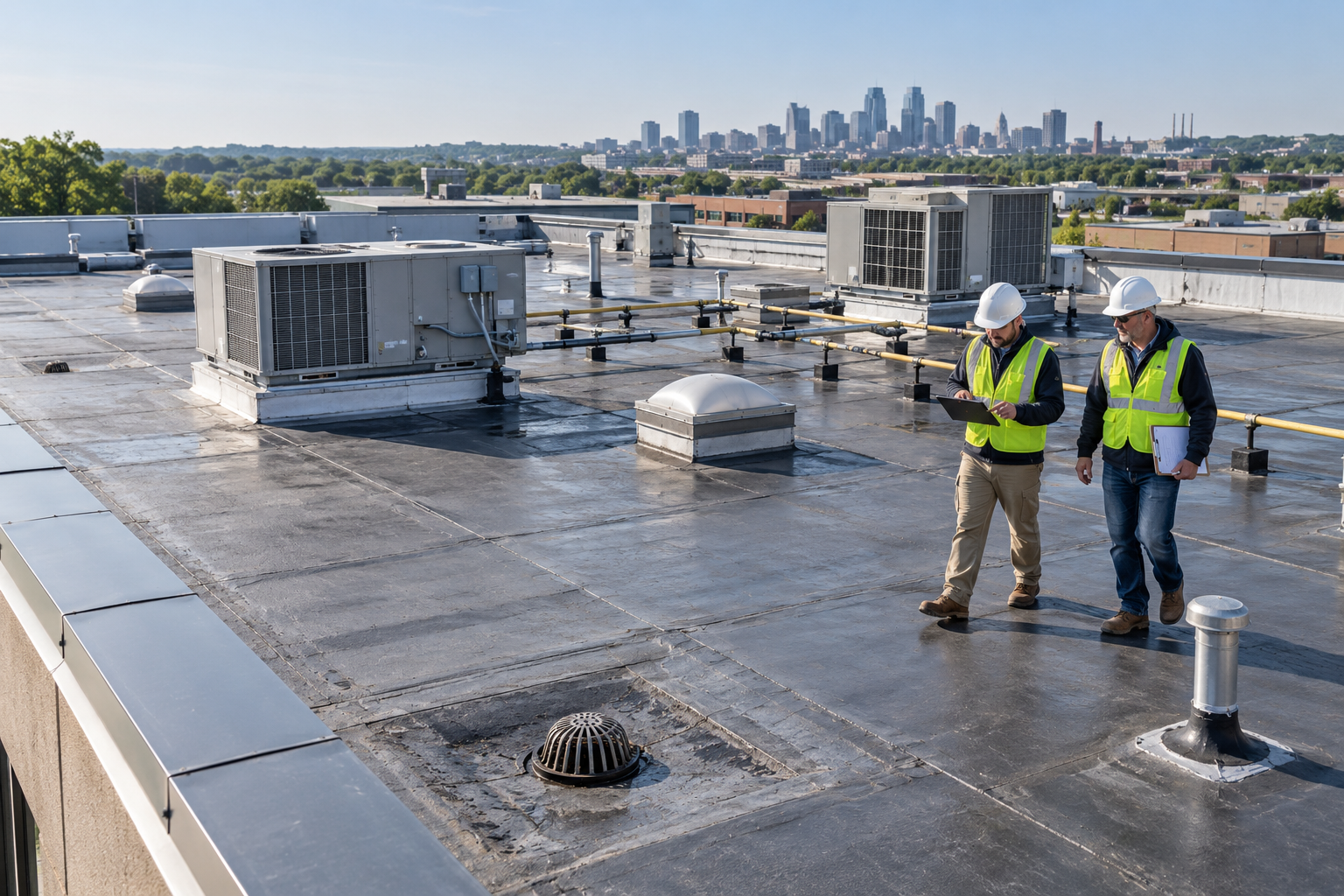
Regular roof inspections help Kansas City property teams find developing conditions, document changes, and decide what needs attention before a small issue reaches occupied space.
Kansas City metroService on both sides of the state line
Useful documentationPhotos, findings, and repair priorities
Practical planningImmediate needs separated from future work
A commercial roof can look quiet while drainage, sealants, seams, penetrations, or previous repairs are beginning to fail. A consistent inspection record makes those changes easier to spot and easier to budget.
MidPoint reviews the visible roof conditions, documents areas that deserve attention, and explains which items should be repaired, monitored, or included in future planning. The goal is a useful decision, not a long report with no order.
The exact scope depends on the roof and the property. These are the areas that commonly shape a preventive maintenance conversation.
Review drains, scuppers, gutters, and low areas for blockages or standing water that may place added stress on the roof system.
Look closely at transitions, curbs, vents, pipes, pitch pockets, and other details where movement and weather can create openings.
Document visible punctures, wear, open laps, displaced materials, and previous repair areas that should be watched or addressed.
Check edges, corners, flashings, and terminations where wind and movement can turn a localized condition into a larger problem.
Commercial maintenance is most useful when each visit improves the next decision.
We discuss roof history, known leaks, access, and current concerns.
Visible conditions are reviewed across the roof and its details.
Findings are organized by urgency and practical next step.
Documentation creates a clearer baseline for follow-up visits.
Every roof and maintenance schedule is different. These answers are a useful starting point.
The right interval depends on the roof system, age, condition, weather exposure, warranty requirements, and activity on the roof. A conversation about the property and its history is the best way to set a useful schedule.
Yes. Separating immediate repair needs from conditions that can be monitored gives owners and managers better information for upcoming budgets.
Share the property address, known leak locations, available roof history, previous reports, and any photos from inside the building. That context helps focus the visit.
MidPoint can discuss a repair scope after reviewing the condition. The recommendation should match the issue, the roof, and the property plan.
Tell us about the property, the roof history, and any conditions your team is watching.